

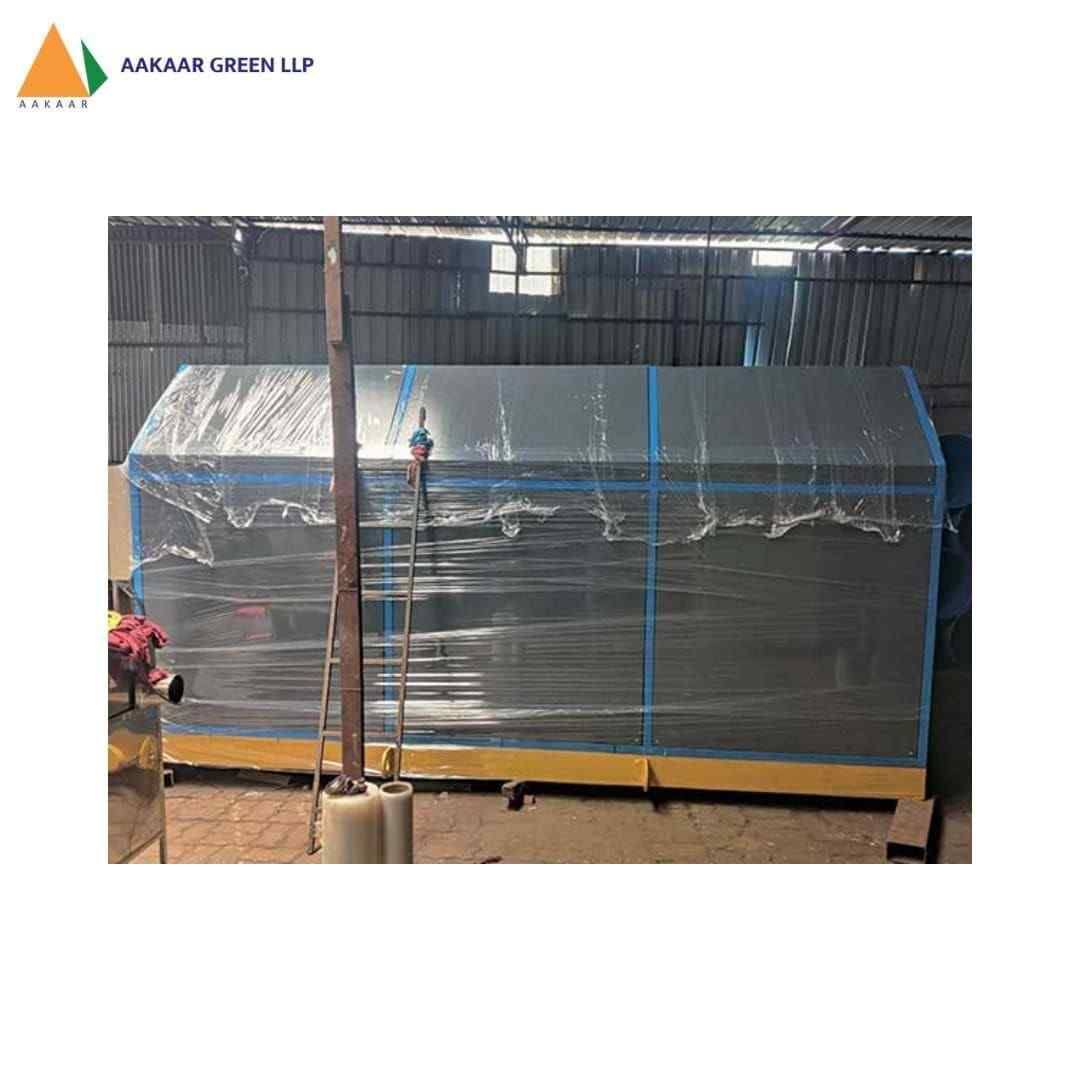


Aakaar Green LLPoffer well-known OWC and Composting Machine in India, Organic Waste Converter, (OWC) is a modern automatic machine which expedites the composting process by regulated heat, mixing and moisture management. It can break down the food waste, vegetable scraps, fruit peels, and other biodegradable materials in a short time.
Composting Machine is a machine used for natural decomposition through biological activity. May take slightly longer processing time according to machine and waste type. Kitchen waste and garden waste and food waste are all types of waste that are suitable for composting and can be made into nutrient rich compost using composting machines, for use in landscaping, gardening and agriculture.
As OWC and Composting Machine manufacturers in Pune, India, it’s important to recognize the difference between OWC and composting machine because there are some benefits.
| Feature | Organic Waste Converter (OWC) | Composting Machine |
|---|---|---|
| Working Process | Uses mechanical mixing heating and microbial activity to accelerate waste processing | Primarily relies on natural biological decomposition of organic waste |
| Processing Speed | Faster processing of organic waste | Comparatively slower composting process |
| Automation Level | Highly automated with minimal manual intervention | Can be semi automatic or manual depending on the model |
| Waste Reduction | Provides quick reduction in waste volume | Reduces waste volume gradually over time |
| Compost Generation | Produces pre compost or partially composted material which may require curing | Produces compost through continuous decomposition process |
| Energy Consumption | Requires electricity for mixing heating and operation | Generally lower energy consumption depending on machine type |
| Operational Efficiency | Suitable for handling large quantities of waste daily | Suitable for moderate to small scale waste processing |
| Space Requirement | Compact design with efficient processing capacity | May require additional space for curing and compost maturation |
| Odour Control | Advanced odour control systems are commonly available | Odour control depends on machine design and maintenance |
| Maintenance Requirement | Requires regular inspection of mechanical components | Lower maintenance with fewer moving parts |
| Ideal Waste Type | Food waste kitchen waste hotel waste and commercial organic waste | Garden waste kitchen waste agricultural waste and biodegradable waste |
| Application Areas | Hotels restaurants hospitals industries housing societies and municipalities | Farms schools residential complexes parks and institutions |
As OWC and Composting Machine in Pune, India, key difference between OWC and Composting Machine is their application.
The choice between an Organic Waste Converter (OWC) and a Composting Machine depends on your waste management requirements, available space, and desired output.
For hotels, housing societies, restaurants, and commercial facilities, an OWC is often the preferred choice because it offers faster waste processing, efficient waste reduction, and easier handling. However, if high-quality compost production is your main objective, a Composting Machine may be the better investment.
Ultimately, the right choice depends on whether you prioritize speed and waste reduction (OWC) or complete compost production (Composting Machine).
There is a difference between OWC and Composting Machines, primarily in terms of speed of processing and level of automation.Aakaar Green LLPoffer best OWC and Composting Machine, both technologies are important in achieving effective utilization of organic wastes into valuable compost and in promoting sustainable waste management systems. Call us today and find the perfect OWC or Composting Machine for your needs.