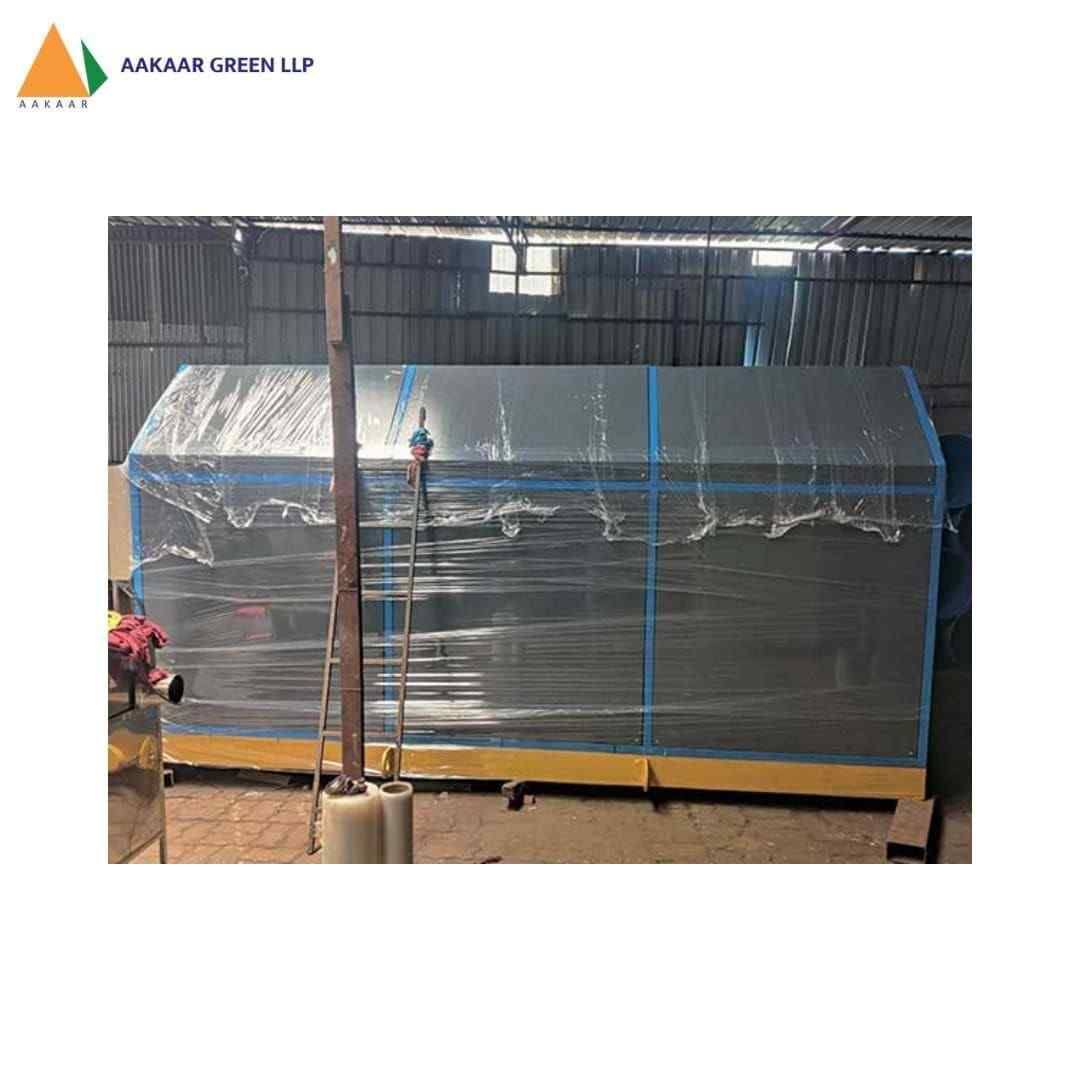


Organic Waste Converters

Organic waste Converter for Residential Societies & Townships | Aakaar Green

Organic Waste Converter
whatsapp
enquire

Aakaar Green LLP offers advanced Organic Waste Converter Machines for hotels, hospitals, residential housing societies, corporate offices, schools, industrial canteens, and municipal waste management projects across India. Designed for on-site wet waste processing, our Automatic OWC Machines convert biodegradable waste into nutrient-rich compost within 18–24 hours, helping organizations comply with Solid Waste Management Rules and reduce landfill dependency. With increasing regulatory pressure and sustainability goals, installing an Organic Waste Converter for commercial and institutional applications has become essential for efficient and eco-friendly waste management.

About Waste Converters

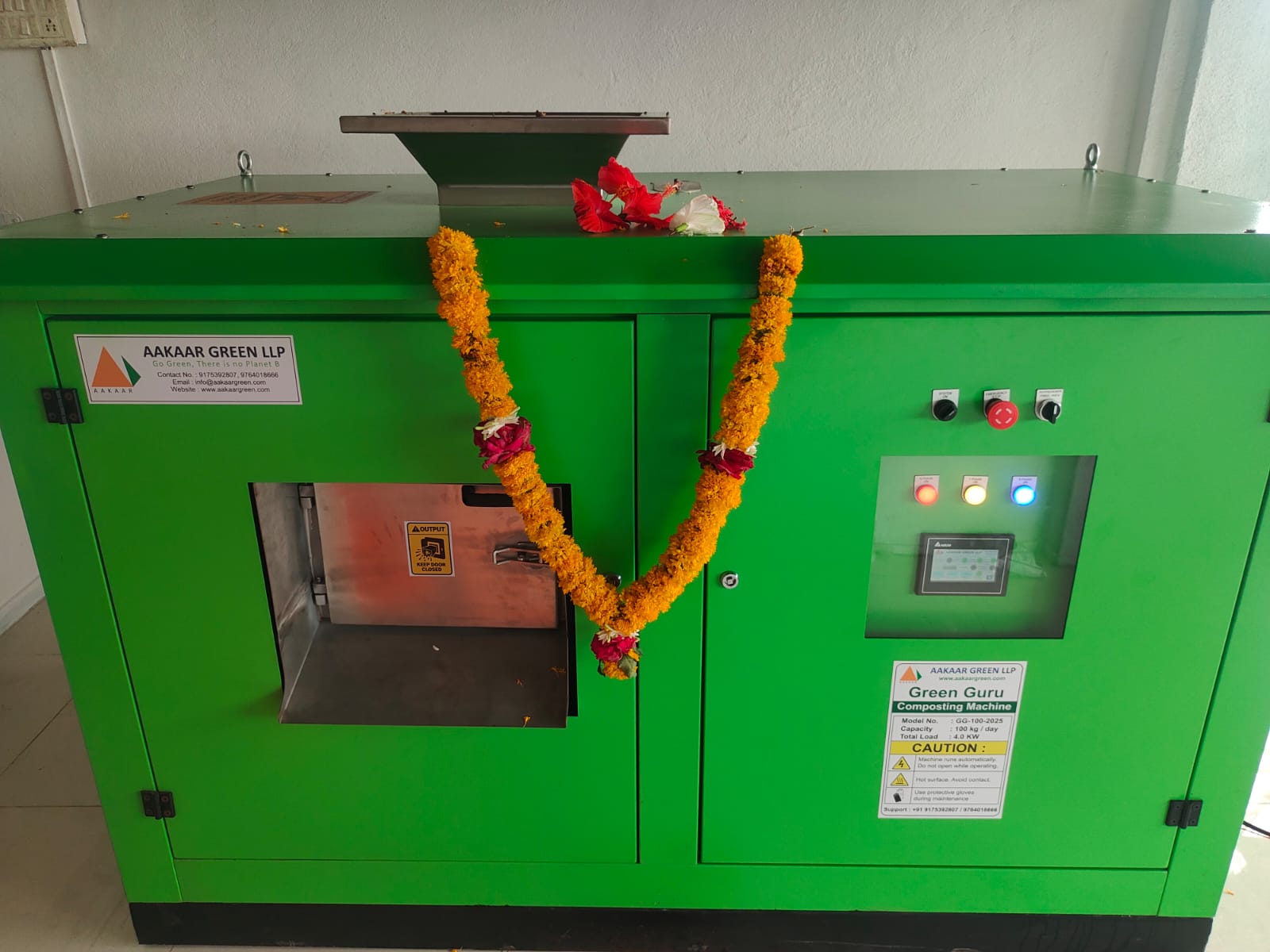
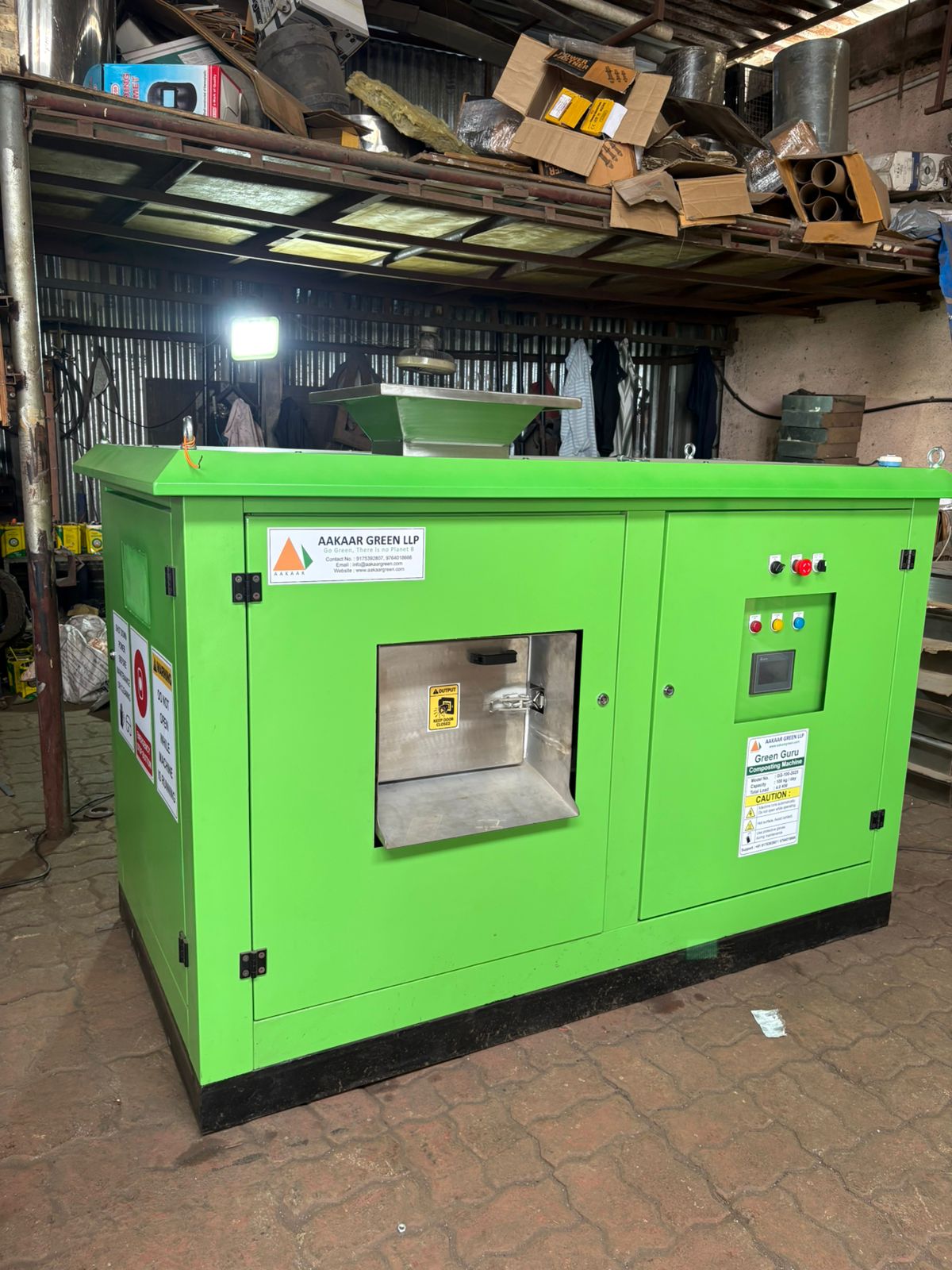
An Organic Waste Converter (OWC) Machine is an automated composting system that accelerates natural aerobic decomposition through controlled mixing, heating, and moisture regulation. It efficiently processes food waste, kitchen waste, vegetable scraps, fruit peels, and other biodegradable materials into reusable compost.

    Manufactured using high-grade stainless steel (SS304/SS316), our machines include:

  • Heavy-duty mixing blades
  • PLC-based control panel
  • Temperature and moisture sensors
  • Advanced odor control system (activated carbon / bio-scrubber)
  • Insulated composting chamber

The final compost is nutrient-rich and suitable for landscaping, gardening, and soil conditioning.

Working Principle

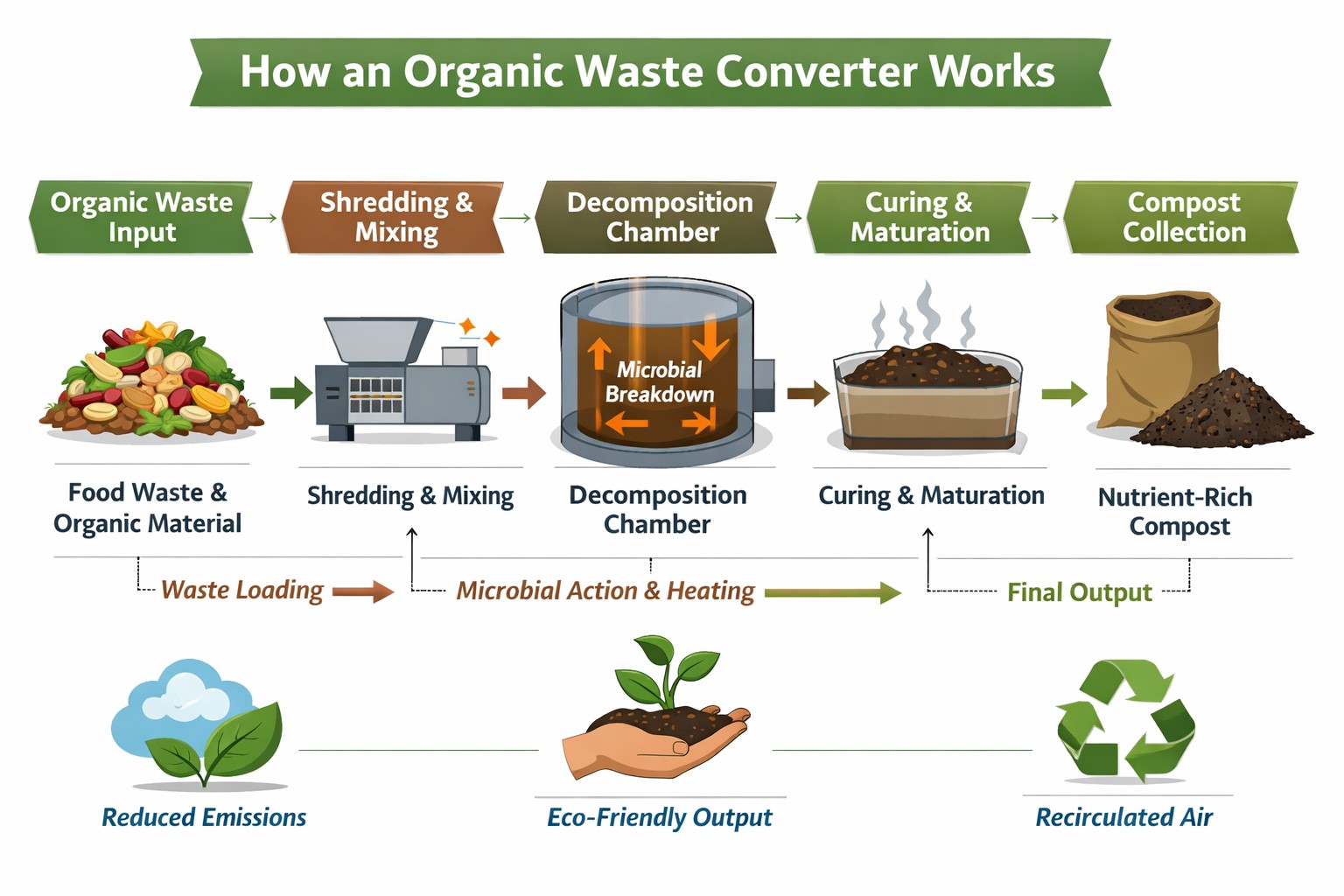
    The Organic Waste Converter operates using controlled aerobic composting technology for rapid and hygienic waste treatment.

    Process Steps:
  • Organic waste is fed into the composting chamber.
  • Shredding and mixing ensure uniform particle size for efficient decomposition.
  • Microbial culture is added to accelerate the composting process.
  • Temperature is maintained between 55°C–70°C to ensure rapid and hygienic composting.
  • Moisture levels are automatically regulated for optimal microbial activity.
  • Compost is ready within 18–24 hours with 80–90% volume reduction.

Types of Organic waste Converter Machine:

  • Compost Bins (Aerobic): Simple plastic or cement containers ideal for small households, using natural decomposition with proper ventilation.
  • Compost Tumblers: Rotating barrel systems that improve aeration and speed up composting, suitable for small-to-mid-sized loads (50–100 kg/day).
  • In-Vessel / Automatic Converters: Advanced machines that shred, heat, and accelerate decomposition within 24–72 hours, ideal for large-scale waste processing.
  • Vermicomposting Systems: Uses red wigglers (earthworms) to convert organic waste into nutrient-rich compost naturally.
  • Anaerobic Digesters / Biogas Generators: Convert organic waste into biogas for energy production and nutrient-rich slurry for fertilizer.
  • Covered Aerated Static Pile (CASP) Composters: Industrial-scale composting systems with aeration pipes to facilitate controlled aerobic decomposition.

Technical Specifications

Specification Details
Capacity Range 25 kg/day – 2000 kg/day
Composting Cycle 18–24 Hours
Material SS304 / SS316
Waste Reduction 80–90%
Power Consumption 1.5 kW – 10 kW
Odor Control Activated Carbon / Bio-Scrubber
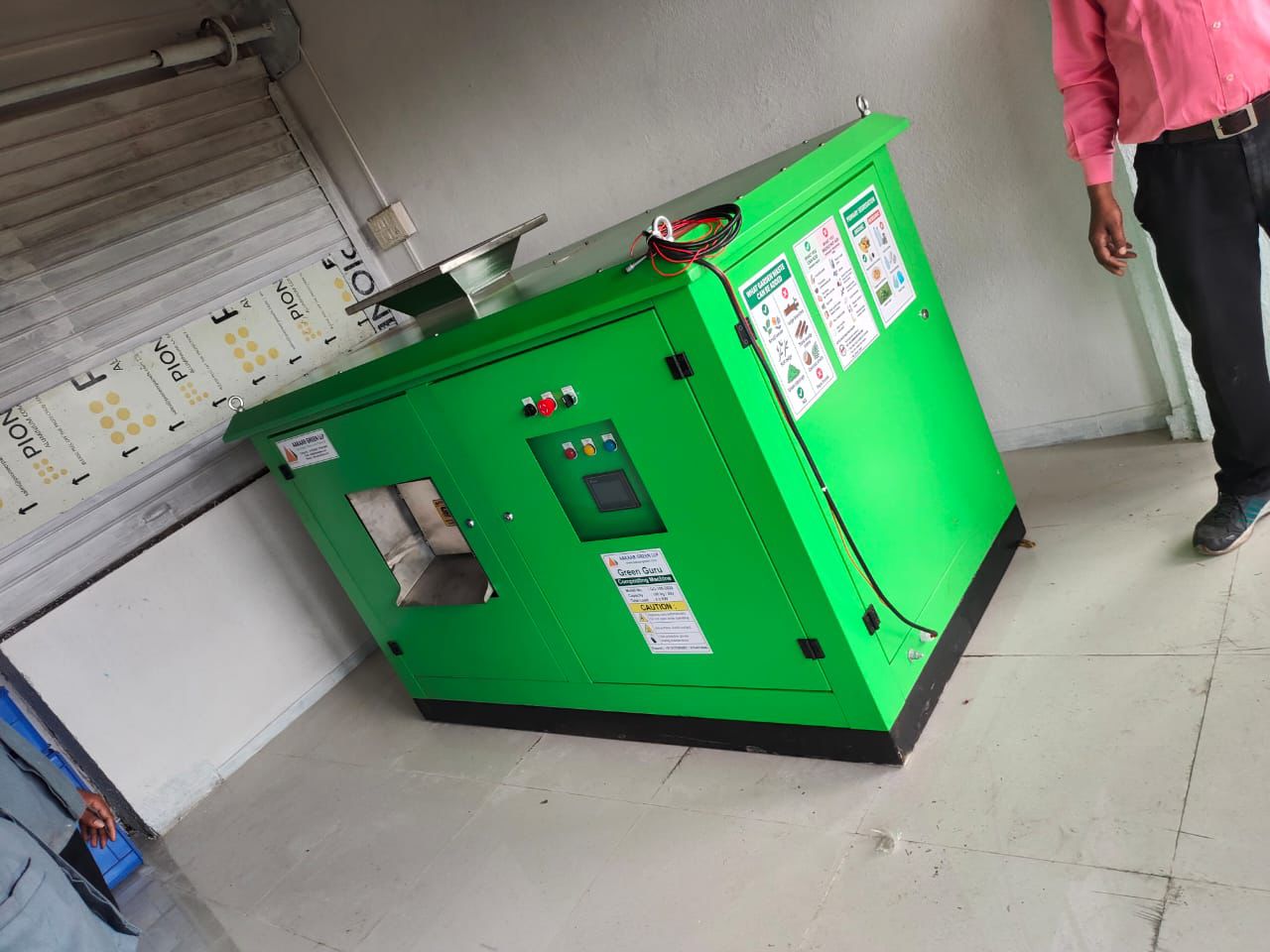
Installation Indoor / Outdoor
Waste Converter
organic waste converter machine installation
 VMC Oil OWC Machine

Organic Waste Converter Price in India (2026)

Capacity Suitable Application Approx Price (INR)
25 kg/day Small Cafes & Offices ₹1.5 – ₹2.5 Lakhs
50 kg/day Restaurants ₹2.5 – ₹4 Lakhs
100 kg/day Hotels & Hospitals ₹4.5 – ₹7 Lakhs
250 kg/day Housing Societies ₹8 – ₹12 Lakhs
500 kg/day Commercial Buildings ₹13 – ₹18 Lakhs
1000 kg/day Institutions ₹20 – ₹30 Lakhs
2000 kg/day Industrial & Municipal Projects ₹35 Lakhs+

Features of Organic Waste Converters

  • Compost Bins (Aerobic): Simple plastic or cement containers ideal for small households, using natural decomposition with proper ventilation.
  • Compost Tumblers: Rotating barrel systems that improve aeration and speed up composting, suitable for small-to-mid-sized loads (50–100 kg/day).
  • In-Vessel / Automatic Converters: Advanced machines that shred, heat, and accelerate decomposition within 24–72 hours, ideal for large-scale waste processing.
  • Fully Automatic PLC Control System: Equipped with a programmable logic controller (PLC) for automatic operation, real-time monitoring, and minimal manual intervention.
  • High-Grade Stainless Steel Construction: Manufactured using SS304/SS316 material for corrosion resistance, durability, and long operational life in harsh environments.
  • Rapid Waste Volume Reduction: Reduces Organic Waste volume by 80–90% within 24 hours, minimizing storage and disposal requirements.
  • Advanced Odor Control Mechanism: Integrated activated carbon filters or bio-scrubber systems ensure odor-free and hygienic operation.
  • Energy Efficient Operation: Designed for optimized power consumption, reducing electricity costs while maintaining high performance.

Applications of Organic Waste Converters

    1. On-Site Food Waste Treatment: Converts daily generated kitchen and food waste directly at the source, eliminating the need for external disposal and reducing transportation costs.
    2. Rapid Compost Production: Used where quick compost generation is required within 18–24 hours for continuous waste processing operations.
    3. Volume Reduction of Organic Waste: Reduces waste volume by up to 80–90%, making it ideal for facilities facing space constraints.
    4. Decentralized Waste Management: Supports localized waste treatment systems to reduce landfill dependency and promote sustainable waste handling practices.
    5. Odor-Free Waste Processing: Suitable for environments where hygiene and odor control are critical, thanks to enclosed and filtered systems.
    6. Waste-to-Resource Conversion: Transforms biodegradable waste into nutrient-rich compost for reuse in landscaping, gardening, and soil enrichment.
    7. Compliance with Waste Management Regulations: Helps organizations comply with solid waste management rules by processing biodegradable waste at the source.

Points to Consider Before Purchasing

    • Assess Daily Wet Waste Generation Capacity: Determine the average quantity of biodegradable waste generated per day to select the appropriate machine capacity.
    • Verify Installation Space Availability: Ensure sufficient space is available for machine installation, operation, and maintenance access.
    • Confirm Power Load Requirements: Check electrical load availability and compatibility with the machine’s power consumption specifications.
    • Select Suitable Odor Control Configuration: Choose between activated carbon filters or bio-scrubber systems based on environmental sensitivity.
    • Check After-Sales Service and AMC Support: Ensure reliable technical support, spare parts availability, and Annual Maintenance Contract options.
    • Ensure Compliance with Municipal Regulations: Verify that the system meets local solid waste management guidelines and environmental norms.
    • Evaluate ROI and Long-Term Operational Savings: Analyze cost savings from reduced waste disposal fees and potential compost utilization benefits.

Case Study – 250 KG OWC Installation

A residential housing society generating approximately 230 kg/day of wet waste installed a 250 kg Organic Waste Converter.

Results Achieved:
    • 85% Reduction in Landfill Waste:
    • Lower Transportation Costs:
    • Compost Reused for Landscaping:
    • ROI Achieved Within 18 Months:

Aakaar Green LLP delivers high-performance Organic Waste Converter Machines for hotels, hospitals, housing societies, corporate offices, industries, and municipal projects across India. Our advanced composting technology ensures rapid waste reduction, regulatory compliance, and long-term cost savings while contributing to a sustainable and cleaner environment. Contact us today for expert consultation, customized quotations, and the best Organic Waste Converter solution for your application area.

FAQ’s

No. Advanced odor control systems using activated carbon filters and bio-scrubbers prevent foul smells during operation.

With proper maintenance and AMC support, a high-quality stainless steel composting machine can last 10–15 years or more.

Yes. The compost generated is nutrient-rich and can be used for:

  • Landscaping
  • Gardening
  • Soil conditioning
  • Green belt development

Primary composting takes 18–24 hours, depending on waste type and moisture level. Full curing may require a few additional days for stabilized compost.

call